
Speciality drugs
Patients’ care pathway fragmented due to prohibited commercial practices
Patients’ care pathway fragmented due to prohibited commercial practices
Since the 2000s, increasing numbers of patients have been prescribed so-called specialty drugs. Most of these treatments are very expensive, and some can require specific types of care or management, including ensuring that the drugs are properly administered (e.g., if they must be injected).
For many of these prescription medications, manufacturers have established patient support programs (PSPs) to make it easier for patients to obtain refunds or financial assistance when they need it, or to provide therapeutic follow-up services.

However, some prohibited practices, which violate patients’ rights, have become entrenched over the years.
In fact, when they are prescribed their medication, a patient is often in a highly vulnerable state, and is referred to a so-called speciality pharmacy by the PSP, which has preferential relationships with a select number of pharmacies and other third parties, despite the fact that this is prohibited under current laws and regulations. No one can impose a choice of pharmacy or pressure a patient: manufacturer, infusion clinic, physician, pharmacist, insurer or employer.
Preventing fragmentation of care
If you are receiving a specialty drug from another pharmacy, tell your usual pharmacist about it. This is especially important to make sure that your file is analyzed in full, which includes checking for drug interactions and side effects.
Pharmacists are expanding their range of services to manage the entire pharmacological therapy of their patients, or at least to coordinate it by having access to the complete file. This makes the process much smoother for the patient and ensures better care coordination.
“With my regular pharmacist I get much more personalized service, because they are familiar with my overall health situation and my entire history. My pharmacist is the one I can consult if I need antibiotics because of my immunosuppressed condition, or when my blood pressure is too high. People like me who have to live with a chronic disease and are in a highly vulnerable state can maintain control over their therapy and their lives, regardless of what some groups or individuals may say. And that starts with making our own choice of the pharmacy where we want to get your medication.” – Isabelle, who is living with two autoimmune disorders, including Crohn’s disease
“The fragmentation of patient care is totally illogical. Québec’s 7,000 pharmacists and their teams also have the capability and the skills to properly serve their patients. They have a strong presence in all regions and are easily accessible, right in people’s neighbourhoods. We help patients every single day, and we are the ones who are there to meet their every need, large or small.”
– Judith Choquette, owner-pharmacist, Longueuil
A unique model that benefits patients
In Québec, pharmacists have an exclusive ownership right that allows them to own and manage their own pharmacy. This exclusive right is a protective mechanism that ensures patients’ interests remain at the heart of pharmacists’ decisions.
By guaranteeing pharmacists’ professional independence, it promotes broader territorial representation, making it easier for the population across Québec to access a frontline healthcare professional. Several provisions of the law and the pharmacists’ Code of Ethics contribute to making Québec’s pharmacy model one of the most advanced and advantageous for patients.
The 1,900 pharmacies located throughout Québec are therefore a cornerstone of the healthcare network. There are 7,000 pharmacists (4,900 women and 2,100 men) working at the heart of communities, serving patients. These accessible professionals, experts in medication, have developed their practice around patients’ needs.
Business practices that harm network development
Unfortunately, prohibited commercial practices between a handful of so-called speciality pharmacies and certain patient support programs create closed circuits that prevent community pharmacists from fully playing their role and serving patients effectively.
To remain open and accessible, pharmacists must organize their services based on patients’ evolving needs. And specialty medications are therapies that are rapidly growing!
It is therefore essential that community pharmacies in Québec have unrestricted access to specialty products, which represent the future of drug therapies. No pharmacy, wholesaler, manufacturer, or patient support program should interfere with pharmacists’ work or with patients’ right to choose their pharmacist.
Frequently asked questions
If you would like more information about patient support programs or financial assistance, an explanatory brochure is available here.

Let’s help ensure that the local pharmacy network survives
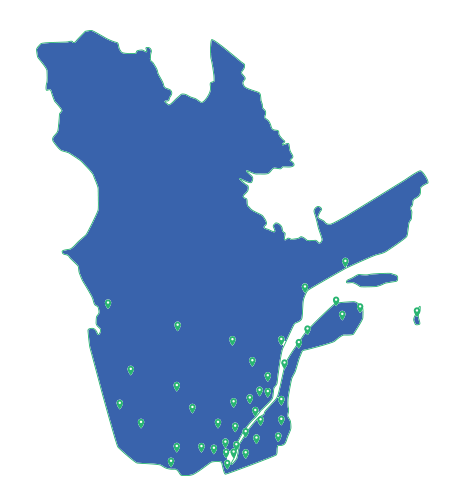
Did you know that a small group of individuals, alongside certain pharmaceutical industry players (certain manufacturers and their patient support programs), are engaged in non-compliant strategies that are contrary to the Act Respecting Prescription Drug Insurance and the Code of Ethics of Pharmacists and that allow them to control the majority of the specialty drug market?
That’s right: there are six so-called specialty pharmacies currently sharing 40%* of the specialty drug market in Québec. This situation is jeopardizing the survival of Québec’s pharmacy network, making the patient care pathway more complex and funnelling the resulting profits to a handful of pharmacists. And yet those profits could be of benefit to the overall community pharmacy network, helping to maintain or improve frontline services provided to patients.
With the Government of Québec preparing to further expand pharmacists’ scope of practice in frontline care through Bill 67, it is important to safeguard the vitality of the local pharmacy network as we know it today, as it has a presence in all of the province’s regions and communities.
*Patients covered by the RAMQ for the year 2023–2024
Class action
In response to the unlawful and wrongful commercial practices being perpetrated by certain groups and individuals, the Association québécoise des pharmaciens propriétaires (AQPP) has filed an application for authorization to institute a class action against 10 of its pharmacist members and the pharmacist owners of six pharmacies, three patient support program (PSP) managers and three private infusion networks. To learn more, go here.

Are you affected by this situation? Share your story!

To report a situation
Anyone wishing to report a situation where laws and regulations are not being upheld and they are pressured into obtaining a service from a pharmacy they have not chosen may reach out to their pharmacist or the RAMQ using the following contact information:
WEBSITE
Visit the “Reporting Wrongdoing” section of the RAMQ website, accessible at the bottom of any page of the site, under “Your rights.”
TELEPHONE
1 877 858-2242
Régie de l’assurance maladie du Québec – Dénonciation
C.P. 6600, succ. Terminus
Québec (Québec) G1K 7T3